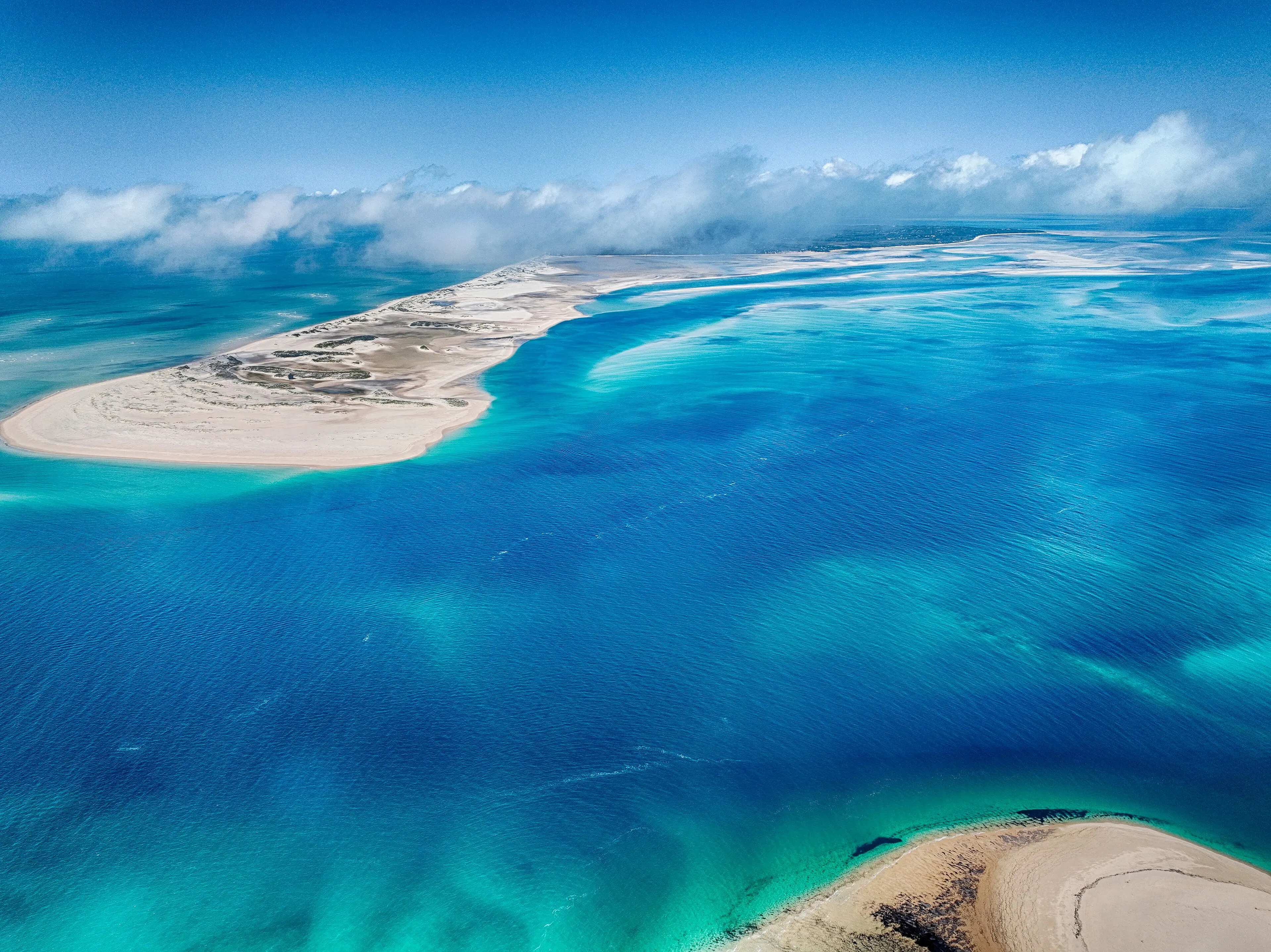
Every winter the Mozambique Channel turns into a humpback highway. Thousands of whales swim up from Antarctic feeding grounds to breed and calve in the warm, sheltered water between the mainland and Madagascar — and the stretch off Vilanculos and the Bazaruto Archipelago sits right on the route. From roughly July to October you can watch forty-tonne animals breach from a dune, a dhow, or the deck of an island transfer boat, often without paying a metical extra for the privilege.
When the whales arrive
The first humpbacks are usually spotted in late June or early July, heading north. Numbers build through July, peak in August and September — when mothers with new calves loiter in the calmer water — and taper off through October as the migration turns south again. A few stragglers are seen into November, but if whales are the point of your trip, aim for August or September. Sightings in those months are close to a daily event, though the sea makes no promises and a windy day can keep everyone in port.
Conveniently, whale season overlaps with Vilanculos's driest, mildest weather — see our best time to visit guide — so the same weeks deliver clear skies, low humidity and excellent snorkelling visibility.
Three ways to see them
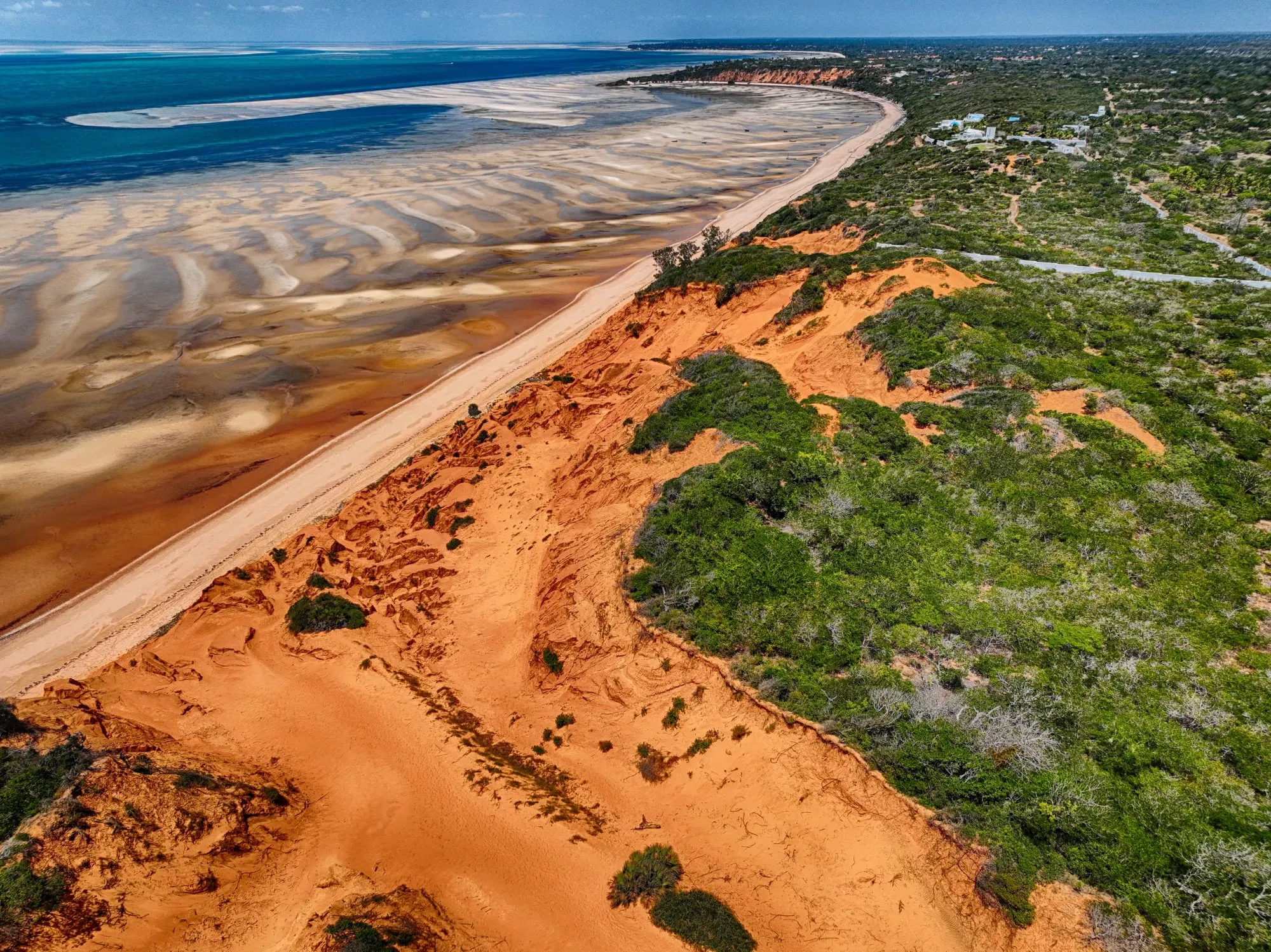
From the shore. The cheapest whale watching in Mozambique is a walk. The red dunes north of town and any raised stretch of the beachfront give you a wide view over the channel; carry binoculars, scan for the white plume of a blow, and be patient around high tide in the early morning when the light is behind you. It's a slow, meditative kind of wildlife watching — bring coffee.
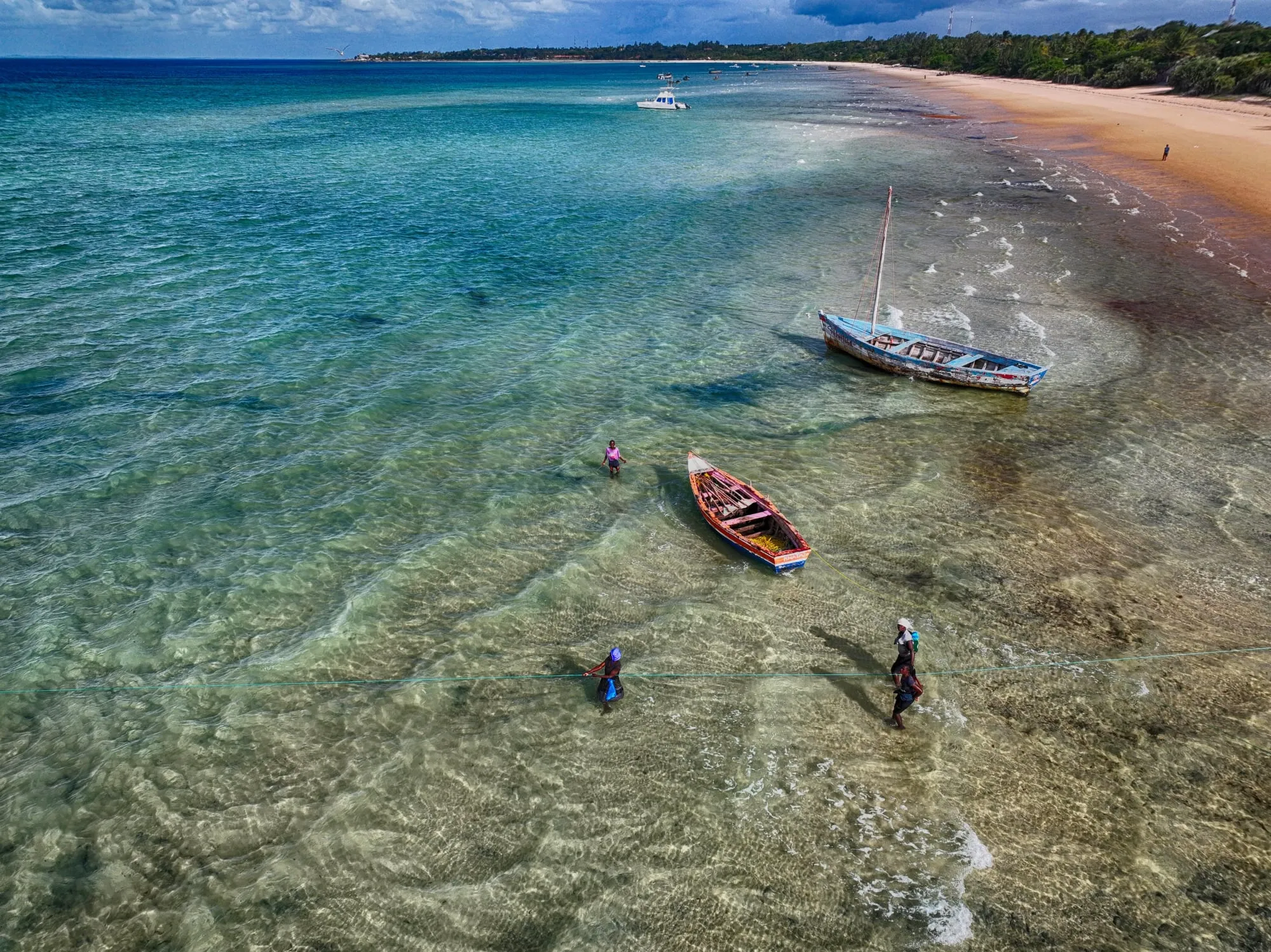
From a boat. In season, the dhow and speedboat operators along the beachfront run dedicated whale-watching trips, typically two to three hours and around $40–60 per person depending on the boat and group size. Sailing dhows are slower but quieter — engines off, just the slap of water on the hull while a humpback surfaces fifty metres away. It's hard to overstate how good that is.
On the way to the islands. The crossing to Bazaruto, Benguerra or Magaruque cuts straight through whale territory, and in August and September many travellers get their best sightings as a free bonus on an ordinary island day trip. Skippers will usually cut the engine and drift if whales show up — most of them love the season as much as you will.
Watching responsibly
These are breeding waters, and mothers with calves are easily stressed. The basics of good practice are simple: boats should approach slowly and from the side, never head-on or from behind; keep a respectful distance (100 metres is the widely used rule of thumb, more for mother-and-calf pairs); never box a whale in between boats; and let the whale decide how long the encounter lasts. If an operator promises to "get you right on top of them" or talks about swimming with humpbacks, choose a different boat — swimming with whales is not a sanctioned activity here. A respectful skipper usually gets longer, calmer encounters anyway, because the whales don't flee.
Making a whale day of it
The smart play is to fold whales into a bigger day rather than chase them in isolation: sail out for a morning around Magaruque or Bazaruto with snorkelling on the reef, watch for blows on both crossings, and be back on the beach for sunset. Most lodges and guesthouses in town will book boats for you — we arrange dhow trips for our own guests at Residencial Duma most days in season — and pairing the trip with a seafood dinner ashore rounds it off properly.
| Month | What to expect |
|---|---|
| June | First scouts arrive late in the month; sightings still luck-based |
| July | Numbers building fast; regular sightings from boats |
| August | Peak season; breaching males, near-daily sightings |
| September | Peak continues; mothers with calves in calmer water |
| October | Migration turning south; still good early in the month |
| November | Stragglers only — a bonus, not a plan |