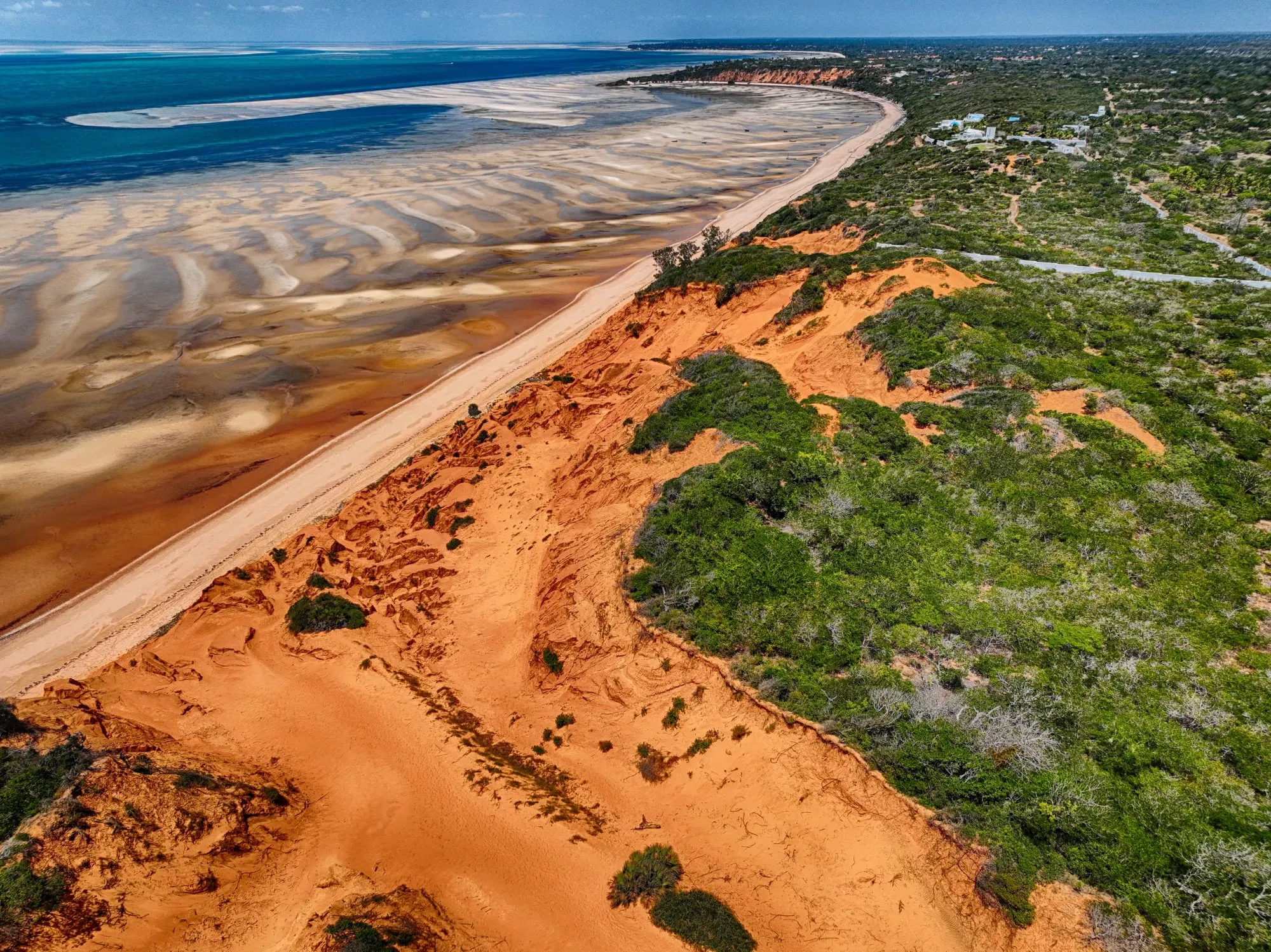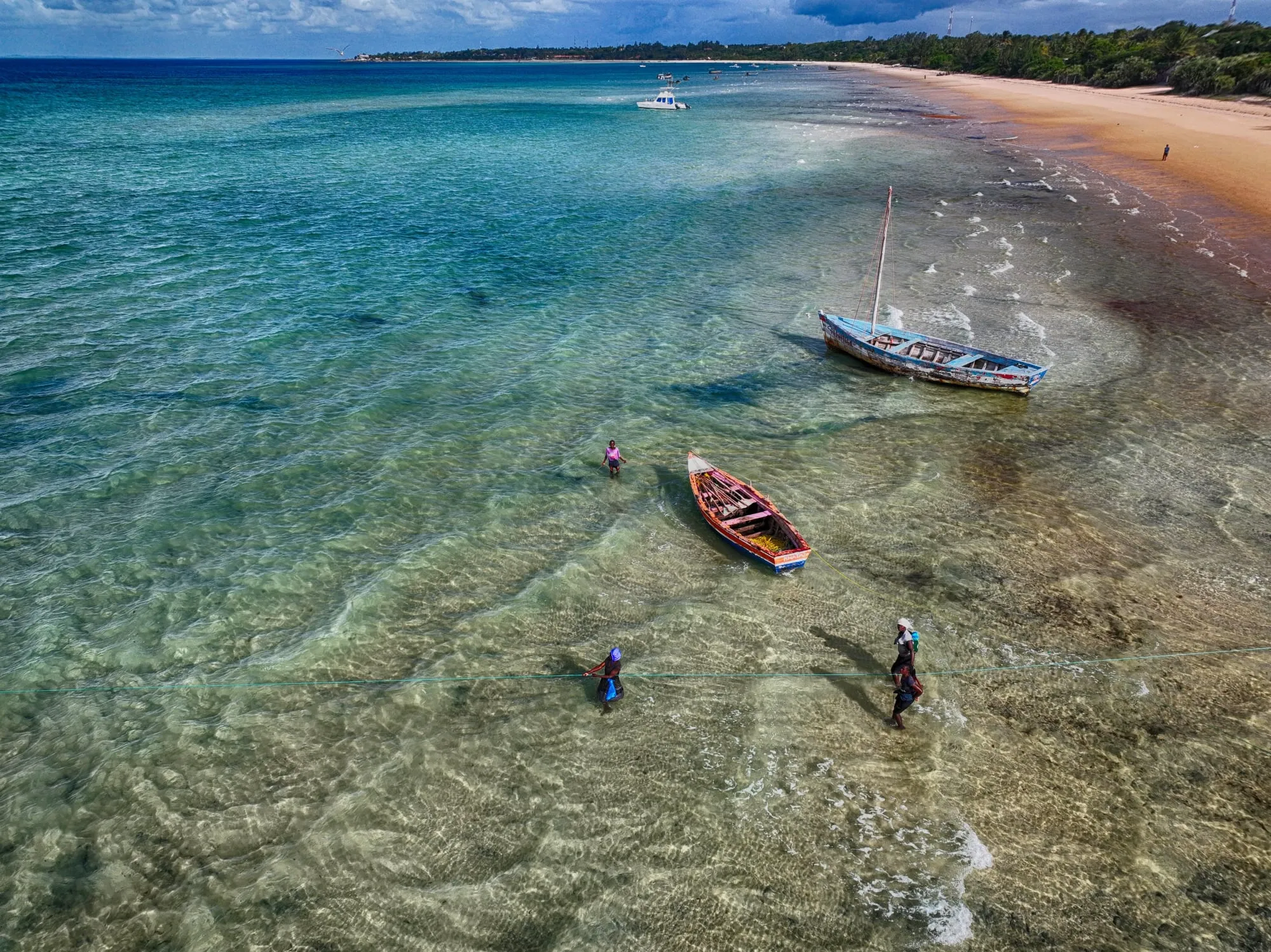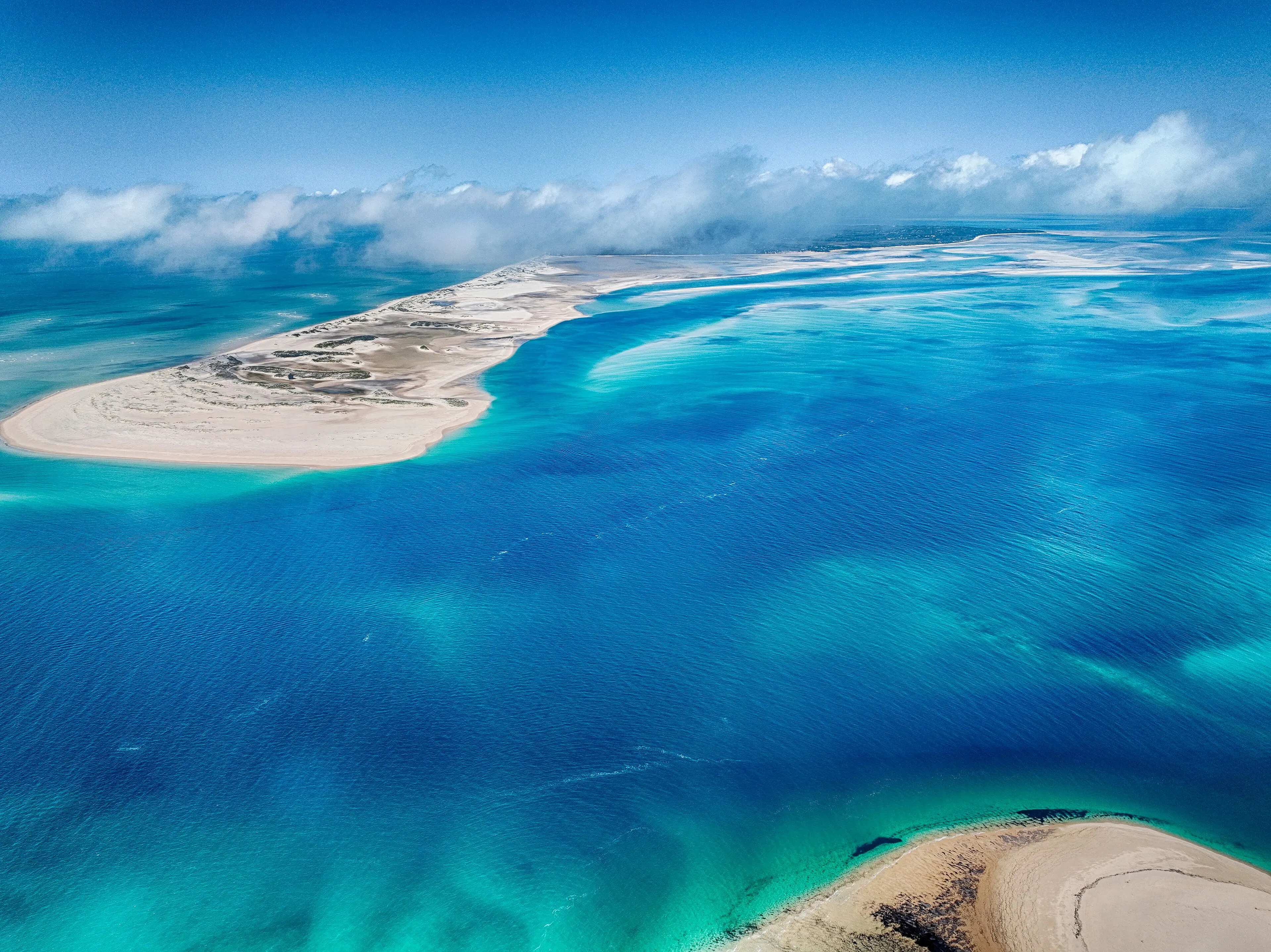
The Bazaruto Archipelago is the reason most people come to Vilanculos — five islands of dazzling white dunes strung across a marine national park, twenty-odd kilometres offshore. The water out there does something unreasonable with the colour blue, the reefs are alive, and you can see it all on a day trip from the beach in town. Here's how.
Dhow or speedboat?
There are two ways across the bay, and they're genuinely different experiences:
- Traditional dhow — the classic. You sail (engine-assisted when the wind drops) on a wooden boat that's barely changed in centuries, usually with a crew who'll grill the lunch they caught on the way. Slower — the crossing can take two hours or more depending on tide and wind — but it is the experience. Expect roughly $40–70 per person for a group trip with lunch.
- Speedboat — 30–45 minutes to the islands, more time snorkelling, easier on a tight schedule or with kids. Usually $80–120 per person depending on group size and whether Two Mile Reef is included.
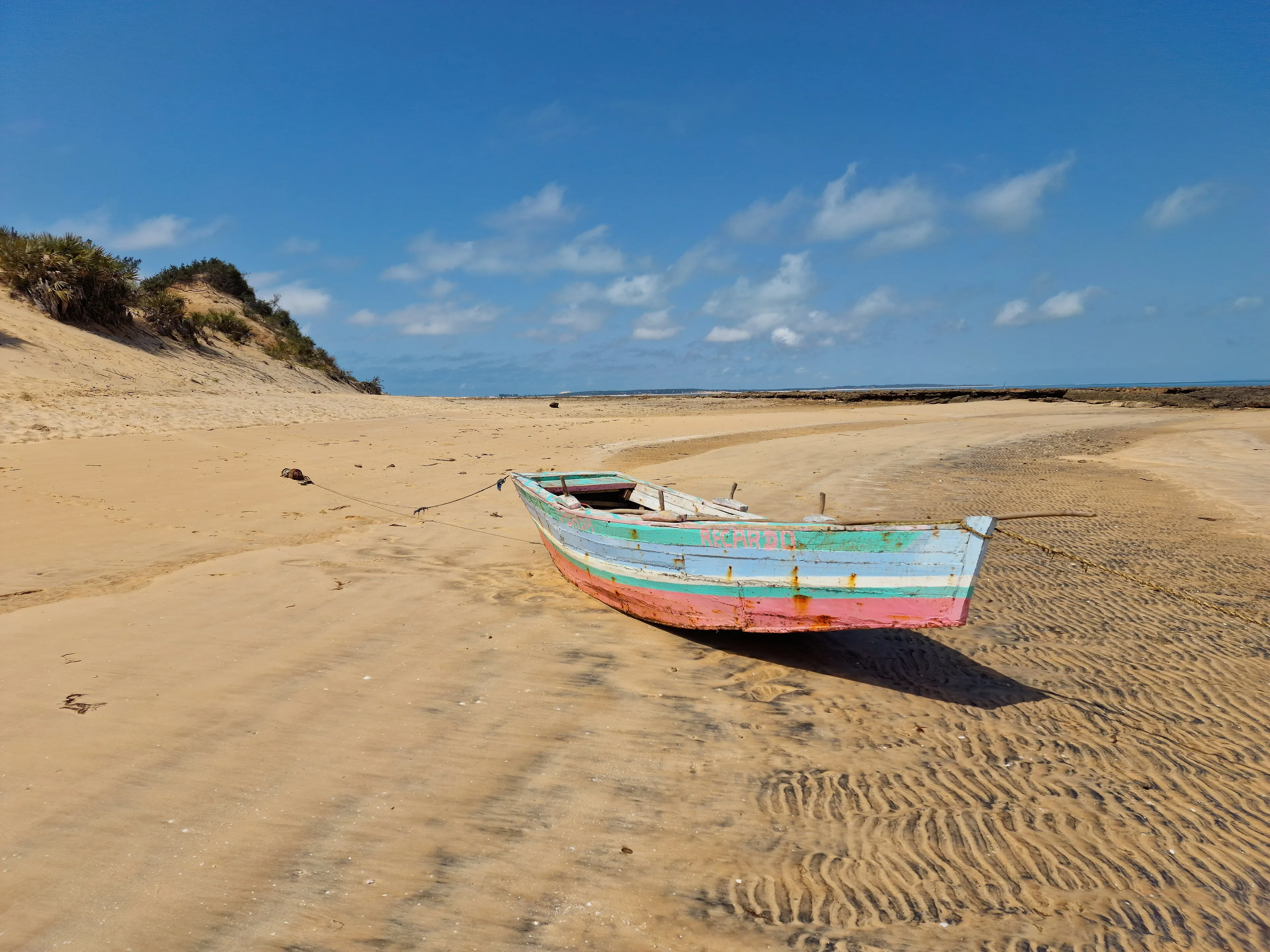
Which island?
- Bazaruto — the big one, with the famous giant dunes. Climbing one and running down is mandatory. Flamingos gather in the tidal lakes behind the beach.
- Benguerra — smaller, lusher, fringed by sandbars that appear and vanish with the tide. Most luxury lodges live here.
- Magaruque — the closest, so it's the usual pick for shorter or cheaper trips. A perfect crescent of beach with good snorkelling right off the sand.
Two Mile Reef
Between Bazaruto and Benguerra lies the archipelago's best snorkel and dive site: a long coral wall with parrotfish, moray eels, turtles, rays and — if you're lucky — reef sharks. Visibility is best on a rising tide. Snorkelling gear is included on most trips, but check; a rash vest beats sunscreen for a morning floating face-down.
Divers can do Two Mile Reef properly with the dive centres in town — two-tank trips run around $120–160. Humpback whales pass through from July to October, and the archipelago is one of the last refuges of the dugong: seeing one is rare, but it happens.
What to bring
- Cash for the marine park entry fee (usually paid separately, ~$10–15)
- High-SPF sunscreen, a hat and a long-sleeved shirt — the glare off the water is brutal
- Dry bag for phone and camera; the landings are wet ones
- Shoes you can wade in
- A jersey for the ride home — the late-afternoon breeze is cooler than you think
Booking a trip
Every lodge and guesthouse in town can book you onto a dhow safari — ask at Residencial Duma and the family will sort it with an operator they trust. Booking a day or two ahead is plenty outside the December–January and Easter peaks.