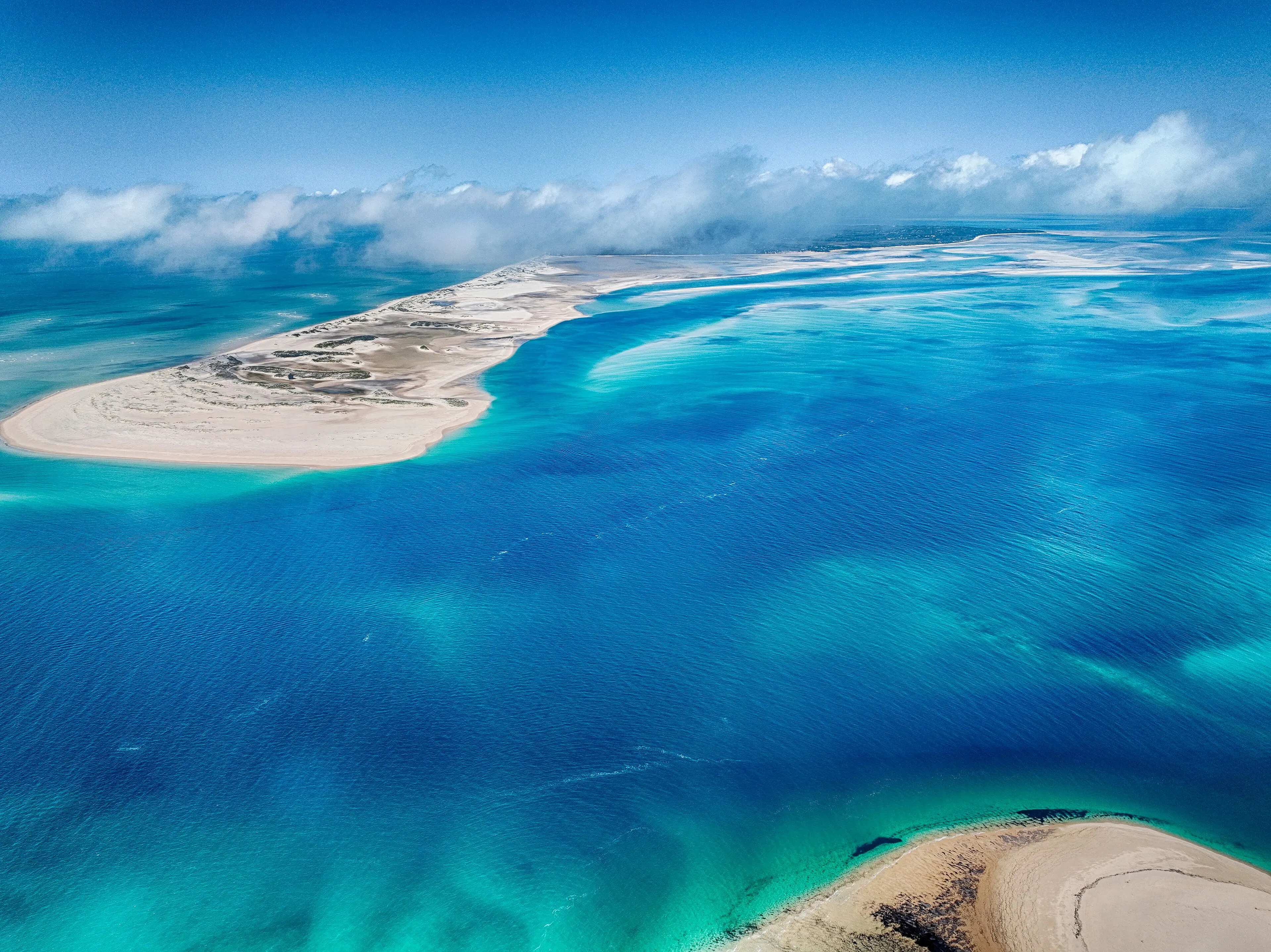
Vilanculos bay was designed by accident to teach people kitesurfing. The Bazaruto islands sit offshore like a breakwater, killing the swell; the water inside is flat, warm and in many places waist-deep at low tide; and for a good chunk of the year a steady trade wind blows across it all. Add lessons that cost a fraction of European prices and a beach with almost nobody on it, and you have one of Africa's most underrated kite destinations.
The wind, honestly
The prime window most riders aim for runs from around September to January, when southerly and south-easterly trades blow most afternoons at a typical 15–25 knots — enough for a 9–12 m kite for most people. Wind here is seasonal rather than guaranteed: you'll usually get several rideable days a week in season, with mornings often lighter and the breeze filling in from late morning. The southern winter (roughly May to August) brings a second, cooler windy spell that some riders rate just as highly, while February to April — the wet, cyclone-watch end of summer — is the least reliable time to come with a board bag. Whatever the month, check a forecast app against local knowledge: the kite crowd in town reads this bay far better than any model does.
Where to ride
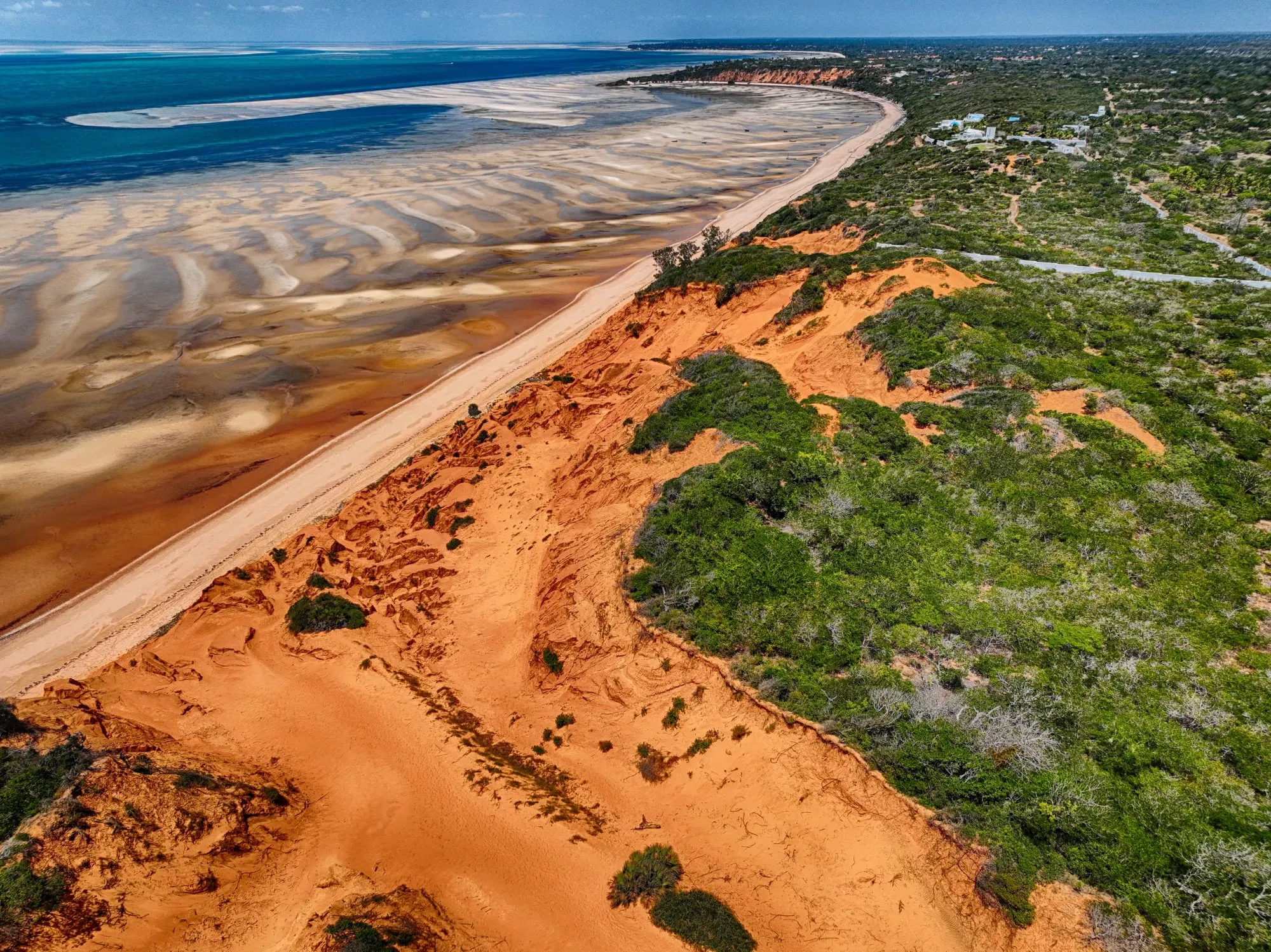
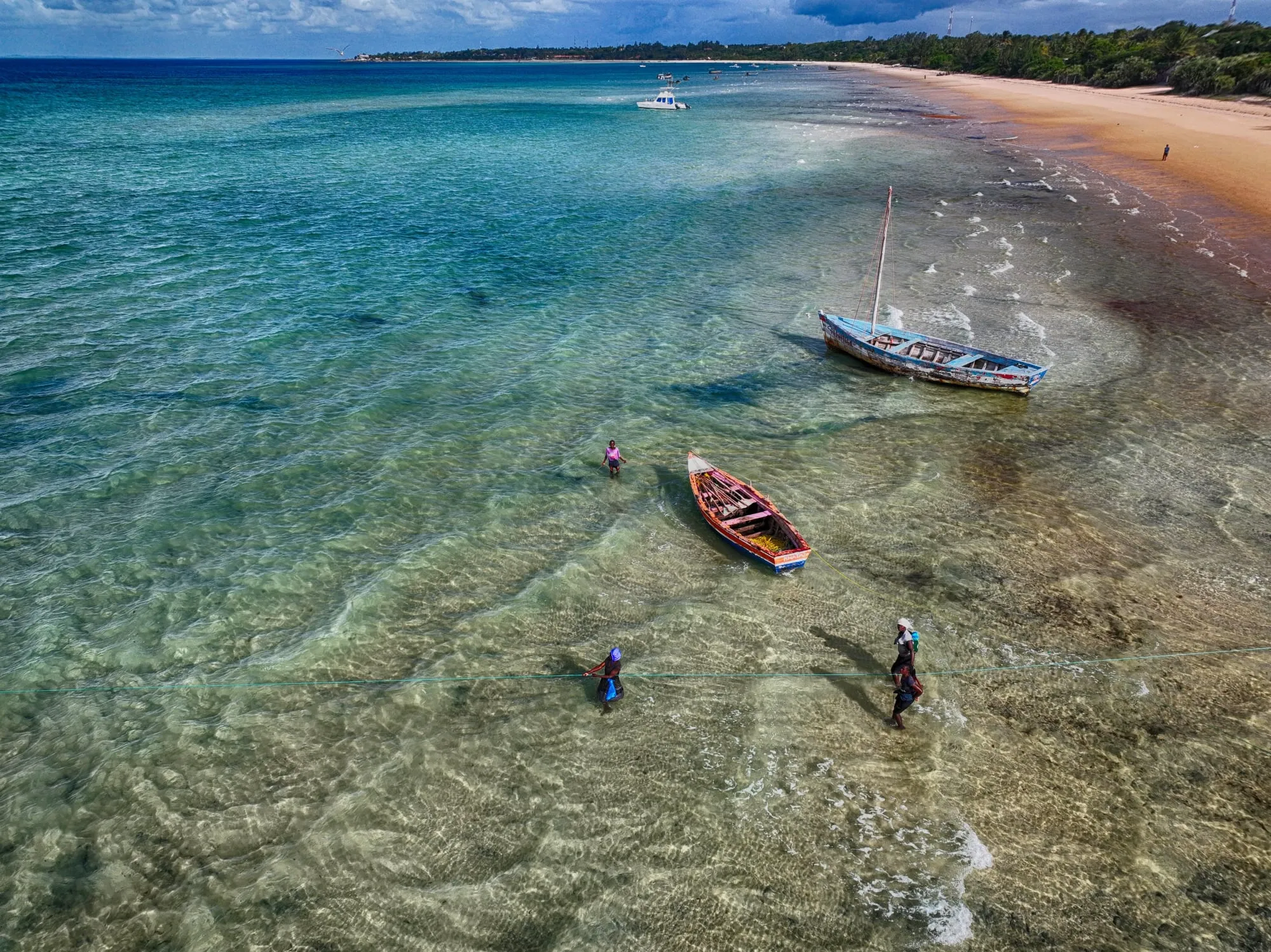
The town beach and bay. The main launch is the long beach in front of town. At mid-to-low tide huge sandbanks dry out and the inside turns into a flat-water playground — knee-to-waist-deep, butter-flat behind the banks, ideal for learning and freestyle. At high tide the water comes right up the beach and there's a bit more chop.
Downwinders and the islands. Confident riders do downwinders along the coast past the red dunes, and the schools run boat-supported trips to ride around Magaruque and the sandbars of the archipelago — flat water in genuinely absurd scenery. These need a support boat and local guidance; the channels carry strong tidal currents and this is not a place to self-rescue alone two kilometres offshore.
Learning here
A couple of kite schools operate from the beach in season, generally with IKO-certified instructors teaching in English and Portuguese; one local outfit also trains young Mozambican riders, so your lesson money does some good. Expect to pay roughly $50–80 per hour for private tuition, with multi-day beginner packages (usually 6–9 hours to get you riding) working out cheaper — noticeably less than you'd pay in Cape Town or Europe. The shallow, sandy bottom means you spend your body-drag hours standing up between attempts rather than treading water, which speeds everything up. Schools rent gear to independent riders too, though fleets are small — in peak weeks it's worth emailing ahead, and any guesthouse in town (ours included, at Residencial Duma) can point you to whoever is teaching that season.
What to bring
- Your own kit if you're particular. Rental exists but selection is thin. A 9 m and a 12 m covers most days; twin-tip for the flats.
- Spares. Lines, bladders, a pump part — there's no kite shop for hundreds of kilometres, so a repair kit is gold.
- No wetsuit needed. The water sits around 24–29°C year-round; boardshorts or a lycra top against the sun is plenty.
- Reef-safe sunscreen and booties. The sandbanks are kind, but some edges have shell and seagrass.
- A tide table. The bay transforms twice a day; your session revolves around it.
Safety and local sense
The bay is forgiving but not toothless. The big variables are the tide — currents run hard through the deeper channels on the push and pull — and the offshore component some summer north-easterlies carry, which can drift a swimmer-with-kite steadily away from the beach. Ride with a buddy or within sight of a school, agree a downwind pick-up point, and treat the last two hours of outgoing tide with respect. There's no coastguard here; the schools and fishermen are the rescue service, and they'd rather lend you a tide chart than fetch you off a sandbank at dusk.
No wind, or no kite?
Wing foiling is creeping in, the schools can usually rig a windsurfer or SUP, and a kayak through the mangroves fills a glassy morning. And a flat calm day is no tragedy here — it's exactly what you want for a Bazaruto day trip or a snorkel on Two Mile Reef, and there's a long list of other things to do while you wait for the trades to come back.